
Checking Criminal History in Byrdstown
Byrdstown criminal records do not begin with a city police portal. The town relies on Pickett County law enforcement, and no municipal court lookup or town jail was verified. Town Hall is the source for ordinary municipal government records. Criminal event records move through the sheriff, the Pickett Circuit or General Sessions clerk, the actual receiving jail, and the state agency that created a highway or park report.
Use this order to keep a Byrdstown records search with the correct custodian:
- Call the Pickett County Sheriff for a Byrdstown incident, arrest, warrant question, or receiving-facility location.
- Request an identifiable sheriff report with the date, location, involved names, report number if known, and desired copy format.
- Call the Pickett Circuit and General Sessions clerk for a filed criminal or fine matter.
- Contact the receiving jail for booking and bond details, or the investigating state agency for its report.
- Use TORIS, FOIL, or another official Tennessee system only for the statewide record type that system covers.
No Separate Byrdstown Police Records Desk
The official municipal directory does not list a Byrdstown police department, and the town's FY2023 audit records a $50,000 contribution to the county police department. That evidence explains why there is no city police records desk, report portal, blotter, form, or police app to use. It does not mean local reports are unavailable. It means the Pickett County Sheriff is the verified first contact for law-enforcement records created in town.
The Municipal Technical Advisory Service profile supplies Byrdstown's official town contact, certified population, hours, and services.
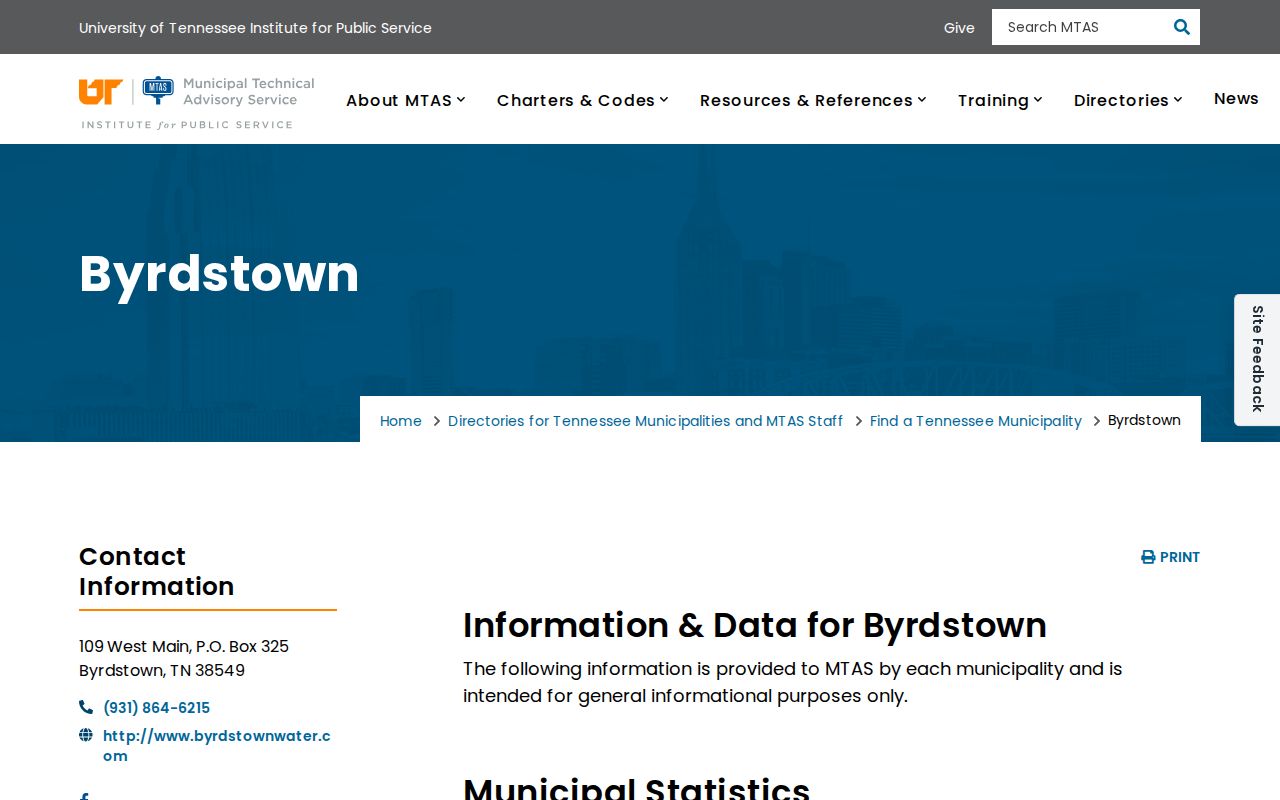
The profile supports the town-government route while its lack of a police listing points criminal report requests toward the county sheriff.
Byrdstown Police Department Records
Because no separate Byrdstown department was verified, police-style incident and arrest reports belong with the agency that responded. For most local events, begin with the Pickett County Sheriff's Office at One Courthouse Square, Suite 300, Byrdstown, TN 38549, 931-864-3210. The published email is pickettcountysheriff@gmail.com. Publication of that address does not prove that a formal Tennessee Public Records Act request can be submitted by email, so ask the office which method it accepts.
A highway event may belong to Tennessee Highway Patrol District 6. A report by a ranger at Pickett CCC Memorial State Park remains a record of the originating state agency, not Town Hall or a fictional Byrdstown police unit. Ask who investigated before drafting a request. That simple question often identifies the correct records custodian and avoids a denial based on lack of possession.
Requesting Byrdstown Incident Records
A precise Byrdstown incident request should name an existing document rather than ask the sheriff to research a broad topic. Give the event date and time, location, involved names, agency, report or incident number if known, and the exact item sought. State whether inspection, a plain copy, or another available format is wanted. A reasonable cost ceiling lets the custodian respond before fees grow.
Tennessee entities must publish a records policy and identify a Public Records Request Coordinator. Inspection requests cannot be forced into writing, though written copy requests may be required. A custodian may ask for proof of Tennessee citizenship. Inspection is free. Copy and labor charges can apply, but no Pickett sheriff fee schedule or stated turnaround was verified. The state model form can help frame a request, yet it should not be presented as an adopted Byrdstown or Pickett form.
Pickett County Sheriff's Office
One Courthouse Square, Suite 300
Byrdstown, TN 38549
931-864-3210
Ask about current request methods
Byrdstown Arrests and Bookings
Byrdstown has no verified town holding facility, and the Pickett County jail closed in 2019. A person arrested in town is booked at an outside receiving facility. The county audit confirms contracts for jail functions but does not identify one fixed receiving county. For that reason, no neighboring jail should be guessed and no unrelated roster should be presented as the Byrdstown booking log.
Call the sheriff with the full name, approximate arrest time, and known arresting agency. Ask which facility accepted the person. The receiving jail is then the source for intake time, initial allegations, bond, release, and visit information. VINE may provide notice once the facility is known. FOIL becomes relevant only if felony custody or supervision reaches TDOC. A filed court case may appear later, and a booking allegation may differ from the prosecutor's charge.
Note: A Byrdstown arrest is an allegation, not a conviction, and the court judgment is the source for the final outcome.
Byrdstown Booking Records After 2019
The closure of the Pickett jail changes every Byrdstown custody search. Historic research describes a very small six-bed facility with two housing rooms and serious limits on separation, programs, exercise, medical space, food preparation, and perimeter security. Those details help explain the former setup, but they cannot be used as current facility facts. TDOC's January 2025 report lists Pickett as closed with zero population.
Recent Byrdstown booking records therefore split across agencies. The sheriff can confirm the arresting agency and destination. The outside jail holds the booking entry. The Pickett clerk holds a filed case. TBI may later hold a fingerprint-linked arrest cycle, while FOIL covers felony custody or supervision under TDOC. A person who disappears from a receiving roster may have been released, transferred, or moved into state custody. Check each channel in sequence instead of assuming the record vanished.
Municipal Court Records in Byrdstown
No municipal court, municipal judge, city docket portal, form, fee, or searchable coverage was found in the official Byrdstown directory. Do not assume that a town citation is stored at Town Hall. The charging document should identify the court, and the Pickett Circuit or General Sessions clerk can confirm where a criminal or fine matter was filed.
| Verified city court | No Byrdstown municipal court listing was located |
|---|---|
| Criminal case contact | Pickett Circuit and General Sessions clerk, 931-864-3958 |
| Lookup channel | Clerk-mediated by party name, approximate date, and docket number if known |
| Possible file contents | Filed charge, events, hearings, disposition, sentence, costs, and later proceedings when public |
| Copies and fees | Ask the clerk about inspection, plain copies, certification, retrieval time, and current cost |
Public Case History is not the local answer. It covers Tennessee appellate courts, not a new Byrdstown General Sessions or Criminal Court matter.
Byrdstown Crash and Arrest Records
For a Byrdstown-area crash, first identify the investigating agency. Tennessee Highway Patrol District 6 serves Pickett County from Cookeville at 1291 S. Walnut Avenue, 931-528-8496. If THP investigated, PurchaseTNCrash asks for requestor identity, involved-driver details, the crash date, reporting agency, and one of the vehicle identification number, plate number, or tracking number. The online report costs $10 and the download remains available for 48 hours.
Eligible THP district or mail copies are listed at $4. Reports are generally available about seven days after a crash, and mail can take two to three weeks. If another agency investigated, request its record instead. A traffic stop, crash report, arrest report, and court case are separate Byrdstown records even when they arise from one event.
Park-ranger reports at Pickett CCC Memorial State Park remain with the responsible state unit. Town Hall does not become the custodian merely because the event occurred near Byrdstown.
Where Byrdstown Records Go
Byrdstown criminal records move through county and state offices because town government does not operate the missing police, jail, or court systems. The sheriff's report stays with Pickett County. A receiving jail creates a separate booking record. The prosecutor and court clerk create the filed case, disposition, and sentence. Reportable fingerprints can establish a TBI arrest cycle, and TDOC records arise only when felony custody or supervision applies.
Record flow: Pickett County Sheriff or state agency › receiving jail and Pickett County courts › Tennessee Bureau of Investigation › Tennessee Department of Correction when applicable.
For a recent town event, the first two links in that chain are most useful. TORIS is a $29 Tennessee name search, not a Byrdstown blotter. FOIL is free, but it covers felony custody and supervision rather than recent local intake. The broader Pickett County criminal history overview explains the limits of each state product.
Federal Byrdstown Criminal Records
Federal records form a separate layer. Pickett County lies in the Middle District of Tennessee, and the district also holds court in Cookeville. PACER supplies federal dockets and filings after registration, with a current fee of $0.10 per page and a $3 cap for many single documents or case-specific reports. No bill is due when quarterly charges are $30 or less, subject to the stated exceptions. These rules do not apply to Pickett County trial files.
The U.S. District Court for the Middle District of Tennessee is the official starting point for a federal Byrdstown-area case.
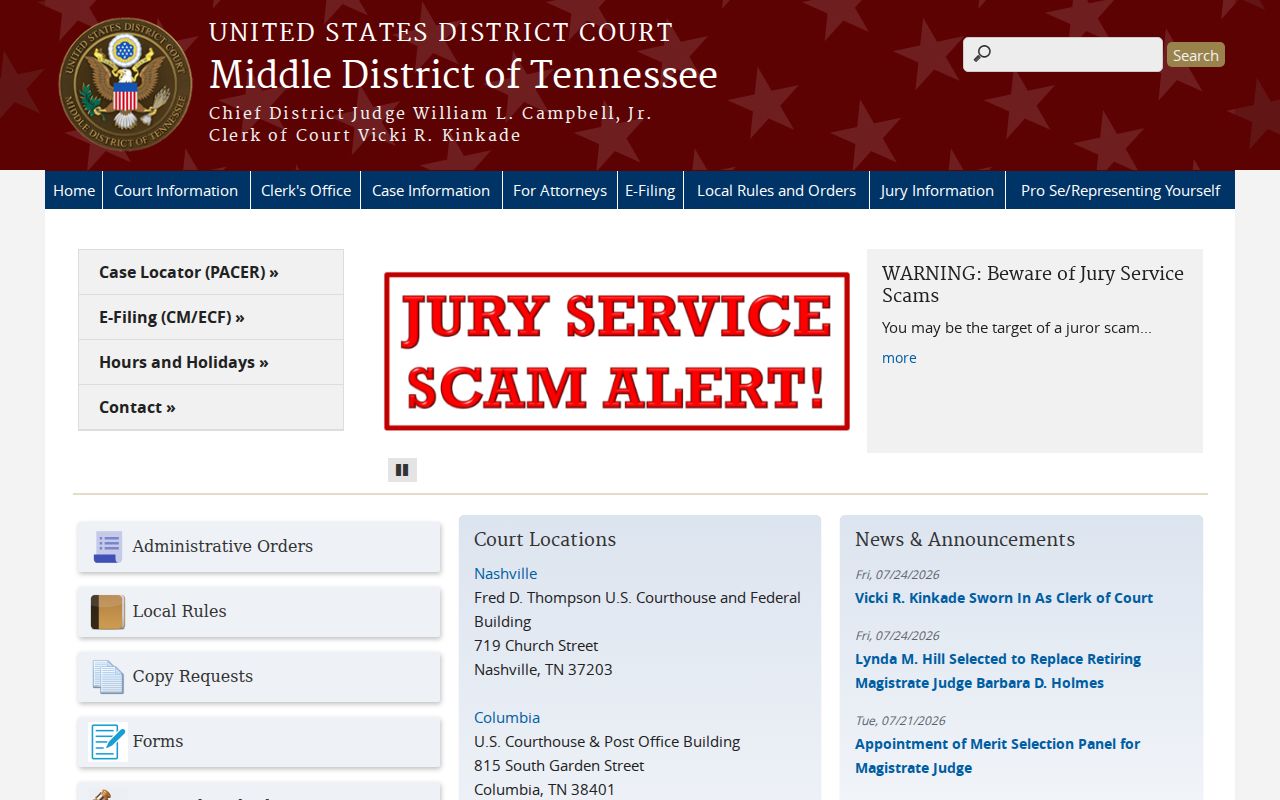
The district court page applies only to federal matters and does not replace the Pickett clerk for state charges.
Federal Byrdstown Custody Records
A federal sentence can lead to a Bureau of Prisons record, while a Tennessee felony sentence can lead to TDOC FOIL. Neither system is a Byrdstown jail roster. The distinction matters when a local arrest has moved through prosecution and custody changes. Start with the sheriff for the receiving jail, then use the court docket to identify whether the case is state or federal before opening a prison locator.
The Federal Bureau of Prisons inmate locator is the official federal custody search.
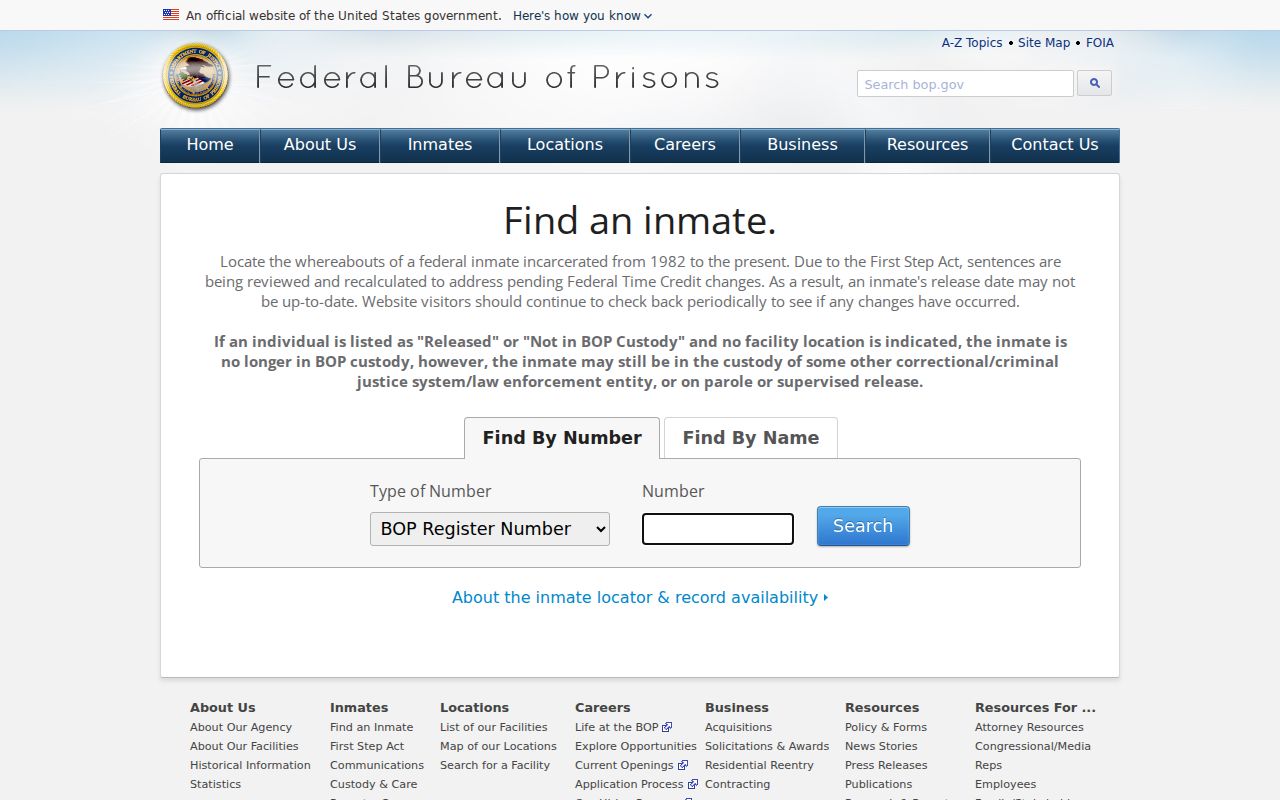
The federal locator does not contain people held by an outside county jail or supervised through the Tennessee Department of Correction.
Byrdstown Records and County-Seat History
Byrdstown incorporated on November 1, 1917 and remains Pickett County's only incorporated municipality. Its 2025 state-certified population is 798. Town Hall is at 109 W. Main Street and is open Monday through Friday from 7:00 a.m. to 4:30 p.m. The town provides water and sewer services and reports thirteen municipal employees. Those facts define a real municipal records counter, but not a criminal records division.
The nearby courthouse became even more important after the former courthouse burned in 1934 and destroyed county records. Its 1935 replacement concentrated court, sheriff, and county offices at Courthouse Square. That local history explains why a Byrdstown records search is physically centered in town yet administered mainly by Pickett County. It also warns historical researchers that some pre-fire material may not survive.
Town Hall is appropriate for board, charter, utility, and other town-government records. Sheriff reports, criminal court cases, and outside-jail bookings remain with their own custodians.
Public Access Rules in Byrdstown
The Tennessee Public Records Act applies to Byrdstown and Pickett County public records unless an exception governs. Tennessee citizens generally may inspect existing public records. A custodian can request identification showing an address. Copy requests may be required in writing, while inspection cannot be forced into a written format. Agencies can charge for copies and qualifying labor, but they do not have to answer broad questions, conduct research, or create a new list.
Key access authorities:
Tennessee Public Records Act, TCA §§10-7-501 et seq. directs requests to the entity that holds the existing record and allows lawful exceptions.
Tennessee Supreme Court Rule 34 governs public court-file access while protecting sealed and other restricted material.
TCA §40-32-101 places eligible expungement in the court process rather than an informal database-removal request.
Juvenile information, protected victim details, financial identifiers, sealed material, and active-investigation content can be restricted. If a request is denied or delayed, ask for the published policy, the coordinator's contact, and the legal basis for withholding.